Your Lockers Shouldn't Need a Manager
Someone loses a key. Someone forgets their combination. A new employee needs a locker. Another employee leaves, and nobody knows whether their locker has been cleared.
Individually, these are small problems. Together, they can turn a basic storage system into an ongoing administrative responsibility.
For facility managers, HR departments, and operations teams, managing lockers probably isn't at the top of anyone's job description. Yet in facilities with hundreds of employees, rotating shifts, or frequently changing personnel, the responsibility can become surprisingly demanding.
Why does something designed to keep people organized require so much organization itself?
The answer might not be more lockers. It might be smarter ones.
The Hidden Job Nobody Applied For
Think about everything that happens behind the scenes of a traditional locker system.
Someone needs to assign lockers, distribute keys, track availability, replace lost locks, and manage employee turnover.
Now imagine coordinating that process across multiple departments, buildings, or shifts.
The individual tasks aren't necessarily difficult. The problem is how frequently they occur and how much attention they require.
Consider a facility with 300 lockers. Every forgotten combination, missing key, or reassignment creates another request for someone to handle. Even when those requests take only a few minutes, they interrupt other responsibilities.
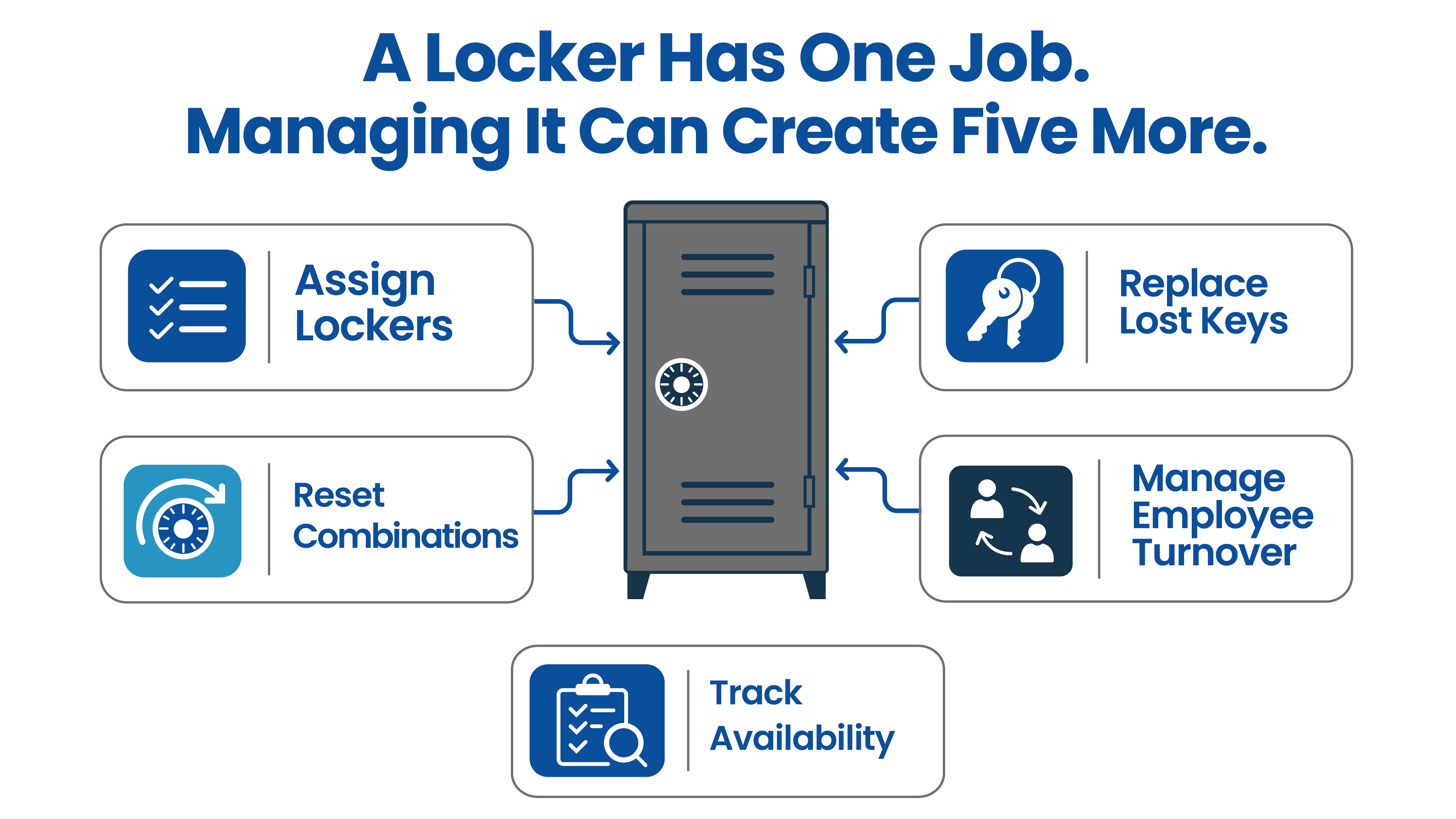
And without a reliable management process, determining which lockers are available might involve spreadsheets, manual records, or physically checking compartments.
A locker system might be doing its job perfectly well by keeping belongings secure, but that doesn't mean it's operating efficiently.
What If the Locker Managed Itself?
This is where smart locker technology changes the conversation.
At its simplest, a smart locker combines a physical storage compartment with electronic access and, depending on the system, digital management capabilities.
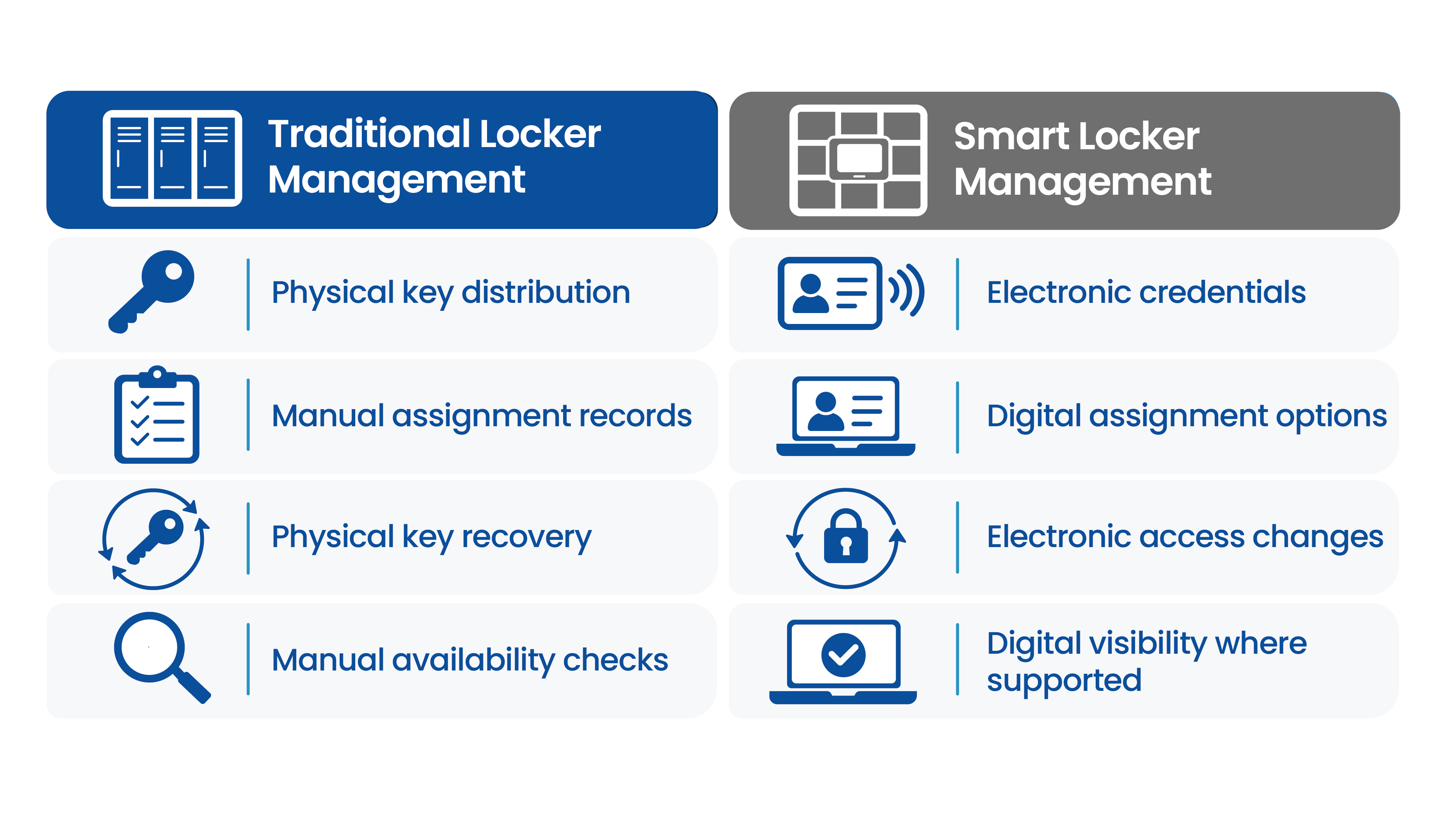
Instead of relying exclusively on physical keys or mechanical combinations, smart lockers can use PIN codes, RFID credentials, mobile applications, or other electronic authentication methods.
Some systems also allow administrators to manage assignments, update access permissions, and monitor locker activity through software.
Consider what that means for everyday operations.
An employee needs access? Credentials may be issued or updated digitally.
Someone leaves the organization? Their access can be revoked without collecting a physical key.
A locker needs reassignment? Compatible systems can simplify the process through centralized management.
These capabilities can reduce the manual steps required to keep lockers accessible and secure.
And for employees, the experience can remain remarkably straightforward.
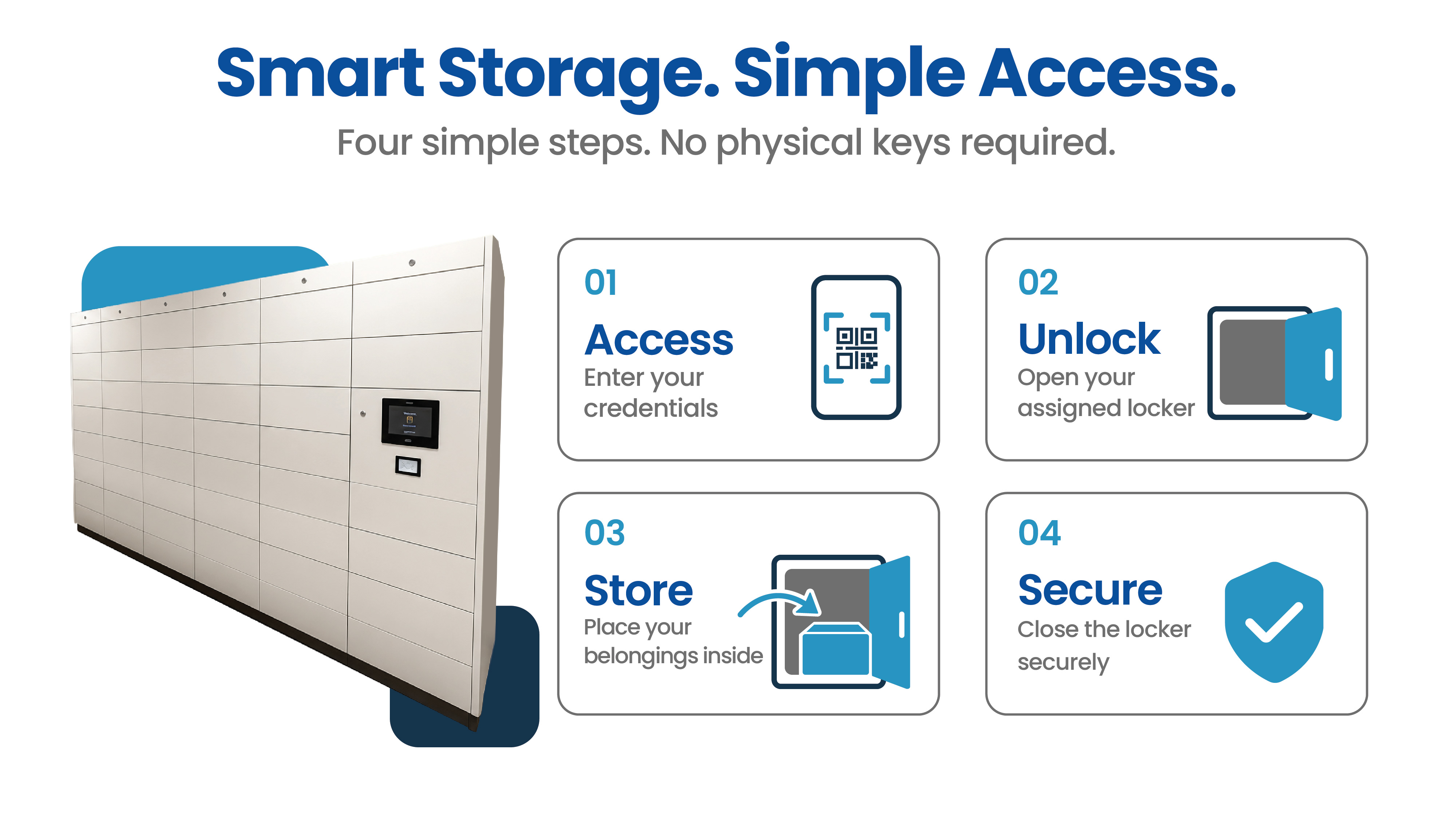
The goal isn't to make lockers more complicated with technology. It's to make managing them easier.
Less Administration. More Control.
The benefits of smart lockers extend beyond replacing physical keys.
Traditional locker systems often assume that each person needs one permanently assigned compartment. But that arrangement doesn't necessarily reflect how every facility operates.
Hospitals coordinate employees across rotating shifts. Manufacturing facilities may operate around the clock. Corporate offices increasingly accommodate flexible attendance schedules.
In these environments, storage requirements can change throughout the day.
Some smart locker systems support temporary or dynamic assignments, allowing facilities to manage shared storage without permanently dedicating every compartment to one individual.
Other systems provide administrators with greater visibility into locker availability or access activity.
These features can help organizations manage storage resources more effectively, particularly when employee populations and access requirements change frequently.
The key is selecting technology that addresses the facility's actual needs rather than adding features that complicate the experience.
Is Your Locker System Working for You?
Not every facility needs smart lockers.
For smaller operations with limited turnover and straightforward storage requirements, traditional lockers may work perfectly well.
But when locker management becomes a recurring administrative burden, it's worth evaluating alternatives.
Start by asking a few questions:
How much time does your team spend managing assignments and access requests? Frequent interruptions may indicate an opportunity to simplify the process.
How easily can access be changed? Employee departures, role changes, and temporary access needs shouldn't create unnecessary complications.
Does every employee need a permanently assigned locker? Shared storage may be more practical for certain work environments.
Can you easily identify available lockers? Visibility becomes increasingly important as installations grow.
What happens when someone loses access? Consider how quickly your team can resolve the issue.
The answers can help determine whether an electronically managed locker system would offer meaningful operational improvements.
Storage That Doesn't Create More Work
At Southwest Solutions Group, we believe storage should support the people who use it and the teams responsible for managing it.
That means looking beyond the physical product and considering how it fits into everyday facility operations.
Smart lockers are one example of how thoughtful storage solutions can simplify processes, improve access management, and help facilities adapt to changing needs.
Our team can help evaluate your workforce, security requirements, available space, and storage goals to identify the right locker solution.
Because the smartest thing about a smart locker isn't how you open it.
It's how little work it should take to manage it.
